Newsletter subscription : -10% off your first order !
From 100 euros, free delivery.
Payment in 3 installments with no fees.
How an automatic watch works: what makes it tick?

The first watches, which were mechanical, had to be wound regularly; otherwise, they would stop, plunging their owners into utter despair as they were unable to answer that fundamental question: What time is it?
Discover everything there is to know about automatic watches in this article.
Reading time: 4 minutes.
Early mechanical watches had to be wound frequently. Otherwise, they would stop, causing great anxiety. Their owners could no longer answer a crucial question: What time is it?
Then came those fantastic and mysterious little machines known as automatic watches*. That’s when everything changed. These watches, which wind themselves automatically to the rhythm of their owners’ more or less hectic lives—driven by their every movement—continue to amaze us and fuel passionate conversations about the reliability of a particular movement, the ingenuity behind the design of a specific oscillating weight, and so on.
*The first automatic watch, known as the “perpetual” watch, dates back to the late 18th century; its creation is attributed to A.-L. Breguet.
Quartz Watches vs. Automatic Watches.
Since the 1970s, most watches have become quartz-powered, and the most modern ones have even dispensed with hands to display a time that is “always” accurate. So, yes, quartz movements are generally more reliable, less expensive, and more compact than automatic (mechanical) movements. But they require a battery, which must be replaced, discarded, found, or repurchased—the magic has its limits.
By contrast, automatic movements appear all the more durable and embody the values of expertise, heritage, and artistic craftsmanship in their most sophisticated forms. An automatic watch is a touch of poetry and magic on your wrist.
How does automatic winding work?
It all starts when you move your wrist or hand—for example, while typing this text on a computer keyboard or drinking a cup of coffee (if, like me, the hand holding the cup is the same one wearing the watch, of course).
So, the movement of your wrist is transmitted to the oscillating weight—this becomes evident when the back of your watch is transparent, like that of our 1955 10 ATM.
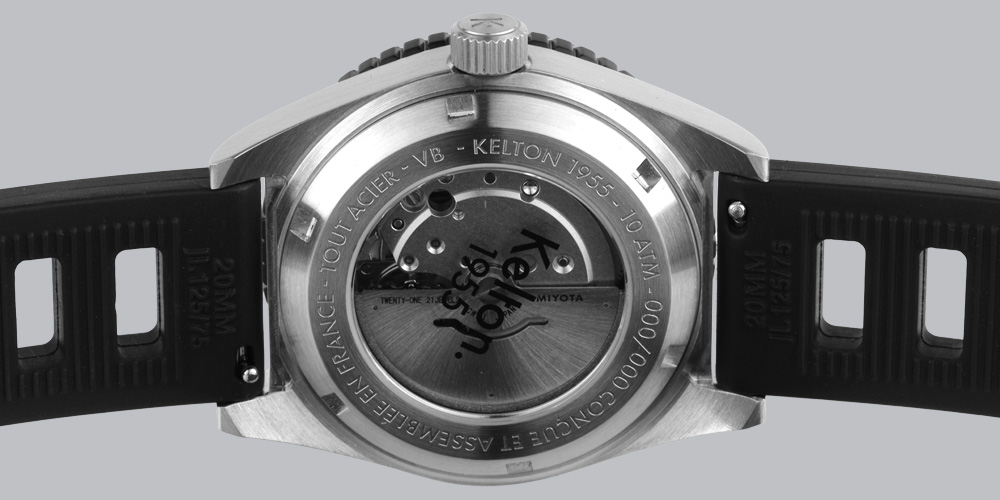
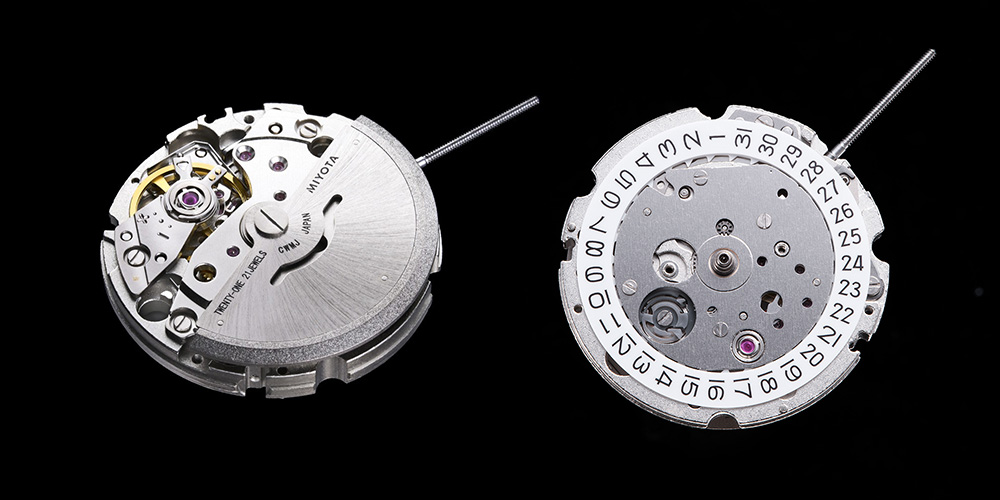
This oscillating weight, or rotor, transmits the energy produced to the mainspring, then through a series of gears to the hands and various indicators, such as the day, date, etc. (here we are touching on another subject, that of complications, to be discussed later).
What is the oscillating weight?
As its name suggests, this semi-circular component responds to every movement
and oscillates freely, through a full 360°.
While every movement of the wrist breaks the oscillating weight’s stillness and sets it in motion with varying amplitude, Earth’s gravity exerts its pull on it and tends to restore its balance and stillness. In the meantime, energy will have accumulated in the mainspring.
Why do mechanical and automatic watches tick?
The mainspring is the watch’s power source; it provides the energy needed for the watch to function. The energy it has stored is transmitted to a set of gears, but it must be regulated—that’s the role of the escapement.
Scoop! It’s the escapement that’s responsible for a watch’s ticking sound. Now you know.
Power reserve.
When you take off your automatic watch—yes, it happens—it keeps running, quietly.
For how long? It all depends on its “power reserve,” sometimes indicated in small letters on the dial. This power reserve varies by model. Most of our automatic models offer a comfortable power reserve of 42 hours.
What about after 42 hours?
Four options:
1. Lend your watch to someone you trust, who can wind it for you through the natural movements of their wrist.
2. You can also wind your watch manually by turning the winding crown—a simple action that reactivates the movement and ensures optimal power reserve.
3. You can use an automatic winder, a device designed to keep your watch moving when it isn’t worn regularly, in order to maintain its accuracy and keep it perfectly on time.
4. You can also, like me, put it back on your wrist, set the time, and it will start running again immediately!
Caring for an Automatic Watch.
The longevity of your watch depends on several factors: the quality of its components, the reliability of the movement, and how you use it. In short, there’s nothing mysterious about it—common
sense is your best ally.
Wear your watch regularly, store it away from dust and impacts when you’re not wearing it (in a watch box or a watch winder for the more sophisticated among you), and have it serviced every 3 to 5 years, or sooner if you’re concerned about its performance.
Kelton’s after-sales service is here to advise you and, if necessary, repair your automatic watch.
Kelton and mechanical watchmaking: a legacy to wear every day.
Since 1955, the year the brand was founded, all Kelton watches have been mechanical or automatic. It is part of the brand’s DNA, and our current automatic watches naturally carry on this legacy.
By offering reliable and accessible automatic models, Kelton remains true to its heritage and the values that have made it successful for decades. Today, its watches are designed to be true heirlooms. Our after-sales service supports every stage of their life, ensuring your watch receives the most appropriate care with every tick-tock.

2 years warranty

Free 48-hour delivery
on orders over €100

Designed and assembled
in France

Secure payment
in 3 installments at no extra cost